Superconnected Chapter 9: More Benefits and Hazards of 24/7 Superconnectedness

Is it necessary to unplug sometimes? How much/how often? What would be the benefits and what would be the drawbacks? If not, why not?

Technology has enveloped our society to a very unhealthy level. Sure, much of the tech we have today is good for everyone involved but only to a certain extent. People have become addicted whether they realize it or not. The near-constant use of social media and other digital services can cause stress, problems focusing, and many other intellectual and social issues. Sometimes we get so wrapped up in our fast-paced digital society that we forget to really live our lives. Putting down our devices can allow us to step back and take in life, nature, the real world and whatever else we want to see.

Nature surrounds us and we often forget it even exists. Some of the most beautiful places on Earth are right here in our national parks and the vast majority have never seen them. There is beauty everywhere in nature if you look at it the right way but that can’t happen when we are on our phones or whatever other devices. Live dialogue can be great for people especially a good intellectual conversation. Time spent unplugged can recharge us mentally and ground us again. It can remind us why we’re here and where we fit in the world and this can be very healthy for people who get so wrapped up in this incredibly fast-paced world we live in.

Superconnected Chapter 10: Our Superconnected Future

Can humans and manifestations of artificial intelligence develop genuine, meaningful relationships? Why/why not?

Artificial Intelligence is defined as the theory and development of computer systems able to perform tasks that normally require human intelligence, such as visual perception, speech recognition, decision-making, and translation between languages. Artificial Intelligence is already here to a fairly high level but it still has a ways to go. The technology industry has been taking massive strides toward developing fully-functioning, human-like robots, otherwise known as humanoids. It all sounds like fairy tale or some made-up vision of the future but we are so close to creating these things.

With the current technology, it is not possible for humans to have meaningful relationships with artificial technology but that could change in the next 10 years or so. We already have robots capable of thinking, having conversations, translating languages, and doing physical tasks so all that is left is to allow them to feel and sense. Believe it or not, Elon Musk could soon have the digital data that we need from neurons firing in real human brains. One of his lesser-known companies has created an implantable interface that allows computers to read brain activity at the most in-depth level and vice versa. This allows us to understand the physical brain activity controlling and reacting to feelings and emotions. Once we understand all of this it can be digitally recreated to allow these humanoids to function like humans. At that point in time, yes, humans can have real relationships with artificial intelligence. Until then, there will remain an emotional divide between humans their robot counterparts.

Superconnected Chapter 8: The Techno-Social Institutions

In what industries will robots replace human workers? How should workers and their families and communities handle this transition, especially if they are over the age of 50 or so?

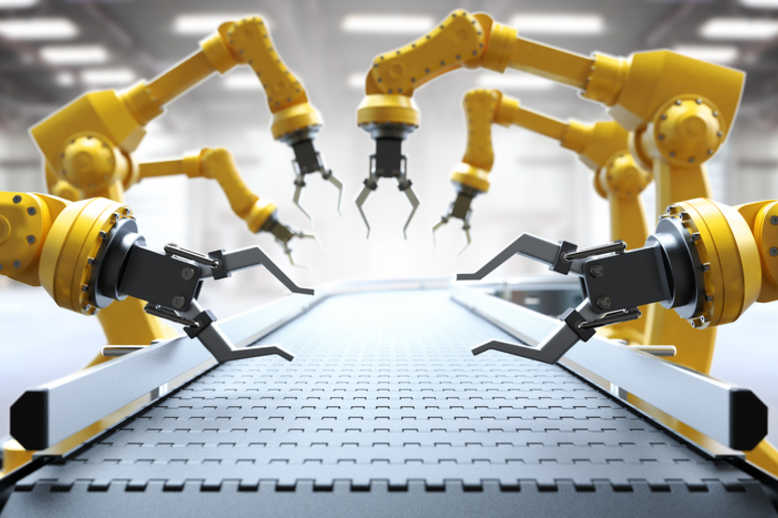
For a long time robots seemed like some futuristic things that would be in all our homes and cater to our every need. Today, robots are just in all our factories and production facilities instead. This is not exactly a bad thing though because robots have a number of good traits that humans don’t. Robots don’t require minimum wage pay, or any pay for that matter. Robots don’t need to take breaks or eat lunch. They don’t get distracted or slow down unless something breaks or goes bad in the system which doesn’t happen very often. Consistency in quality is also a major bonus. There are so many benefits to using technology in place of humans but there exist obvious drawbacks as well. Job loss is a very real concern for many people especially when we have an administration so focused on job creation. However, I believe that just because these robots are replacing humans in manufacturing does not mean that there will be job loss. There will always be handcrafted items that technology cannot create without a human touch no matter how much robots and technology take over. With the rise of technology there will be a rise in the number of jobs in the technology field and those who maintain such equipment. This means new training and different types of jobs. We will not lose our role as a manufacturing nation, people will just be involved in manufacturing in a different way. Not everyone can go to college and not everyone will be able to jump into a field with no training. Training is going to be more common as demand increases for people to maintain the systems used by large manufacturing companies and the like. As demand increases then falls prices will drop and even smaller businesses will soon be able to afford robots and other technologies in their business structures.

Superconnected Chapter 7: Friending, Dating and Relating

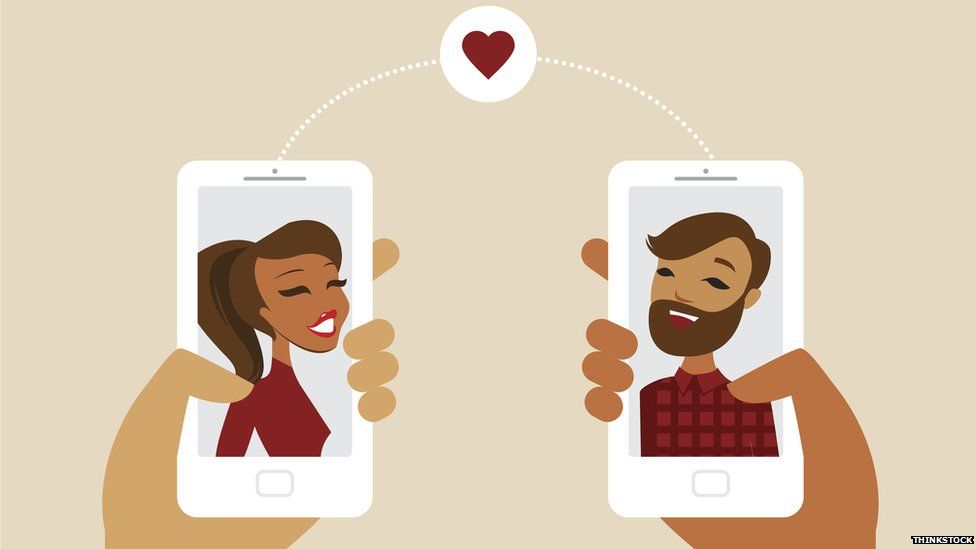
The chances of two people feeling a special attraction and an interpersonal spark (i.e. “chemistry”), are comparatively greater in a digital environment than offline. Do you agree or disagree, and why?

I believe that the chance of feeling a spark in an online environment is much higher because the chances of being turned off by a quirk or whatever else are much lower. People don’t smell funny online. People don’t forget to brush their teeth online. People don’t show their awkwardness online. Sure, meeting online can help us to read the book instead of just looking at the cover but in the real world, the cover matters too. You don’t want to have the wrong book staring you in the face every morning before work or every night at dinner. I believe that judging a book by its cover is obviously wrong but so is doing the opposite. A relationship needs to work on every level no matter what it takes. I do not doubt that great relationships can begin online because it often puts people off to great starts since you’ve already began reading the book but haven’t yet seen the cover.

I personally know that I benefit greatly from in-person interaction as opposed to online communication. All of my best relationships including the one I’m currently in all began in real-life situations-meeting at parties, bonfires, or whatever else it may be so it’s possible I’m biased toward real-life interaction. It seems as though successful, lasting, online relationships are few and far between but as are those that begin through other means as well. With the divorce rate through the roof, I have to wonder if there is some connection to online dating services and meeting people online. There is obviously a difference between talking online and talking in person because we don’t always get the full story online. There are missing pieces that are keys to the rest of the story behind the person you meet online. Online dating can be prosperous for the right people and a failure for others but there is no doubt it provides a kick start to relationships and often times a spark much easier.

Superconnected Chapter 6: Techno-Socialization and the Self

Are digital technologies an extension of ourselves? Why/why not?

Is grass green? Digital technologies are absolutely an extension of ourselves. We choose what devices are best for us and help us the most. We choose the apps we use, how we use those apps, and how we are seen on those apps. It is all at the tips of our fingers. Technology can be used for anything we want in any way we want. Every person’s experience is entirely customized whether they realize it or not. This customization in itself is an extension of ourselves. The content we share, post, and even just view builds our online “portfolio” whether it’s visible to the public or not. Technology acts as a diary for many people in today’s society. It is where they go to vent or give their opinions on various topics. Every action we take online represents some feeling or thought we have subconsciously. It is a place where all our thoughts get put into words for whoever we want to see.

Superconnected Chapter 5: Global Impacts and Inequalities

Does innovation tend to reduce social inequality or deepen it? Provide examples

The only thing that’s certain is that innovation leads directly to new technologies that change the way everyone lives their lives. Some of these technologies are affordable to everyone and some may only be available to the ultra-rich. I believe Tesla is a perfect example of the former. As most people know Tesla produces the best luxury electric vehicles the world has ever seen. Their closest competitors are still light years behind as far as their price and performance. Typically when a single company dominates the market, their prices are greatly inflated because there’s no one else. Tesla is not like that though. The Tesla Model 3 starts its pricing in the mid thirty thousands and the higher performance models are not far behind. Their pricing fits right in with other internal combustion engine vehicles which is mind boggling quite frankly. Cars with similar performance specs to the Model 3 typically start above $60,000. This is the perfect example of innovation closing the social gap. Almost anyone can drive a Tesla these days. Conversely, when Tesla first started, they were priced a good bit higher and the best of them are still more costly than the average person can afford. Most times, when new technologies are unveiled, they become available to the rich faster than everyone else due to pricing or simply availability options. This is the case the majority of the time unless it is a new technology with a low price point aimed at the general population. I don’t believe that innovation deepens social inequality overall but I do think that technological advances benefit the rich faster than the poor. I believe it is a constant flow of innovation that gives the appearance of the deepening inequality rather than actually deepening it.

Superconnected Chapter 4: Sharing and Surveillance

What are some of the pros and cons of self-publishing on the internet as opposed to publishing news, stories, books, etc. in traditional outlets? Think both personally and professionally.

Many people in well-known professional settings take advantages of both traditional outlets and self-publishing because each has their own advantages and disadvantages. When self-publishing there are no standards or expectations that needs to be met. Honesty is more readily available in this fashion as is fake news and dishonesty. There is no editing or proofreading by anybody else. The author is on their own. However, another downside to self-publishing is that the contents may not get the attention desired or needed. It is hard to get personal posts seen by many people. For example, this blog post will probably only get a handful of views while there are billions of people with access to the internet at any given time. At the same time, it is harder for little people like you and I to get things published in big outlets. Especially the way we want, using the language we want. If a self-publishing outlet becomes recognized enough it can be more accessible and widespread than major outlets. These do exist but there are not many as it is very hard to establish especially for an everyday person like you and me.

Superconnected Chapter 3: Inhabiting a Digital Environment

What are some of the key advantages and disadvantages of portability in technology use?

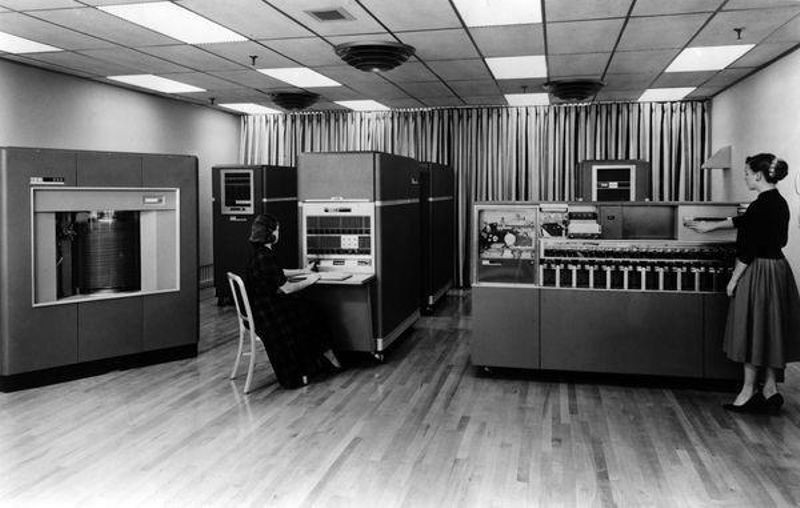
Technology has come an extremely long way since it’s early days and that is no shock to anyone. Early computers could fill up a room with all of their components but today there is more power in some people’s watches than those behemoths. Everyone craves technology and instant answers and the key to these desires is portability. This idea started with Apple’s first home desktop in 1976 and has only progressed from there. First they put technology in people’s homes, then pockets, then wrists, then glasses, then vehicles. Today, technology is everywhere. Fast food restaurants, banks, and so many more have interactive services deleting the need for human interaction. Portable technology is everywhere nowadays and for good reason. Efficiency and ease are very attractive in today’s society. Many of these new technologies offer near instant answers and information about almost anything. Translating between languages has never been easier and pocket dictionaries are a thing of the past. Maps and any other information-containing things are virtually obsolete.

The scary thing about all of this technology, while, make no mistake, it is all great, is that it is everywhere. And that’s not an exaggeration. Our entire society relies so heavily on technology while many people don’t realize that all it takes is one little change in the universe to ruin it all. One solar flare or one disturbance in Earth’s electromagnetic field and all of the technology, of every variety, could be wiped out. Then the people of this society will be lost. While this sounds a little far out, there are not many other downsides to all of this technology. People may be a little less resourceful but if there is no need to be, it doesn’t matter anyway.

Superconnected Chapter 2: Creating the Internet Age

In general, was communication clearer and more effective before the advent of social media? If so, in what ways? If not, why not?

Prior to social media, People relied almost entirely on spoken communication. In most cases, online communication or even any type or written communication is clearer because things can be read multiple times to ensure comprehension. With the same token, written communication can be tricky because we don’t always know the intent of certain phrases such as sarcasm or joking. These can often be hard to pick up without the author actually speaking. The majority of the time, spoken sarcasm can be easily picked up but when the recipient is reading, it can often times be misunderstood. This is one major detriment to written communication whether online or not. Compared to cave drawings and early spoken language, communication through social media and other technology is far more effective and clearer. The information and facts we’re looking for are just sitting there in front of our faces with little room for interpretation which maintains clarity. These communications can also be seen by the masses if appropriate which is something that was near impossible to accomplish prior to social advent. It is simply another, very clear and effective communication media.

Superconnected Chapter 1: Superconnectedness

Are digital devices impacting offline communications? How?

Being connected to so many people so much of the time has so many pros and cons. The ability to communicate with friends, family, and everyone else whenever we please allows bonds to form. Like Chayko mentioned, technology has allowed distant friends and relatives to maintain very close friendships that would have been very hard before it’s advent. Today, people across the globe can talk, share photos, and be part of each other’s everyday lives. Scholars essentially have 24-hour access to mentors and others who can help them along the way. All of this contributes to how we communicate offline too. The connections made online can be carried into society and suddenly someone that you’ve never met in real life can seem like your best friend. For people lacking in social skills, this online communication helps them to grow and become more confident leading to more confident communication offline. If it’s possible to become friends with someone you’ve never met in real life, think of how easy it now is to make friends in a traditional manner.

Design a site like this with WordPress.com
Get started